
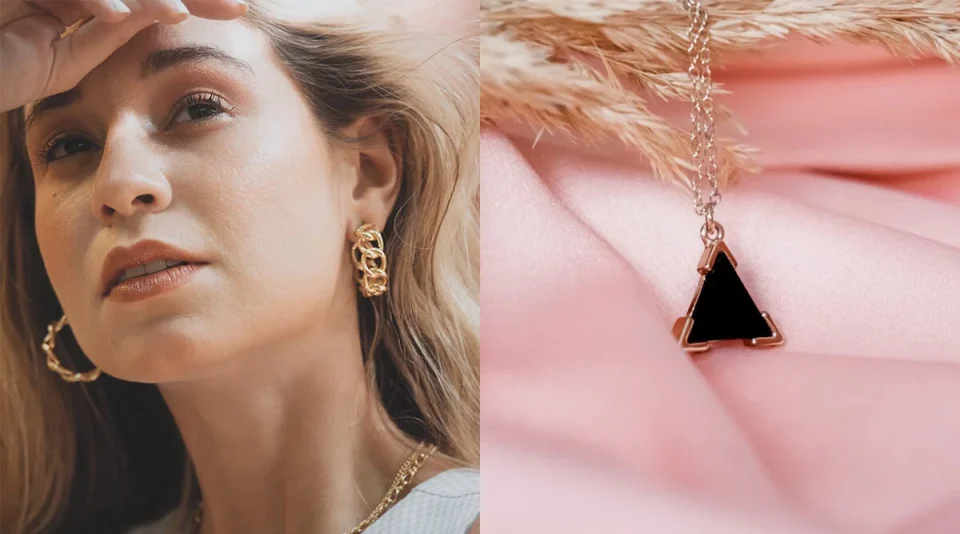
The intersection of mathematics and personal adornment is not a modern phenomenon, yet contemporary jewelry design is undergoing a profound structural revolution driven by geometry. For centuries, traditional jewelry prioritized organic forms, intricate floral motifs, and the classical setting of precious gemstones to showcase wealth and status. Today, a new vanguard of independent designers and historic jewelry houses is shifting the paradigm. They are abandoning ornate asymmetry in favor of clean lines, sharp angles, mathematical patterns, and minimalist forms.
This geometric renaissance reflects a broader cultural movement toward architectural minimalism, digital precision, and industrial design. By stripping away superfluous embellishments, contemporary jewelry focuses on the raw purity of the shape itself. Geometry has transformed jewelry from mere decorative accessory into wearable sculpture, where the interplay of space, symmetry, and structure redefines how people interact with precious metals and gemstones.
The Architectural Influence and Structural Minimalism
Modern jewelry designers are increasingly looking to avant garde architecture and urban landscapes for inspiration. The structural logic of brutalist concrete columns, soaring steel skyscrapers, and clean glass facades translates directly into rings, earrings, and necklaces. This cross disciplinary influence has birthed an aesthetic known as structural minimalism.
In this design framework, the physical structure of the jewelry is not hidden beneath clusters of gems; rather, the structure is the primary focus. Designers utilize perfect squares, isosceles triangles, hexagons, and concentric circles to create pieces that feel grounded, balanced, and deliberately engineered. The beauty of these pieces comes from their mathematical precision. Every angle is calculated, and every surface is polished to maximize the reflection of light across flat planes, creating a dynamic visual effect without relying on traditional diamond pave settings.
Space as a Material The Power of Negative Space
One of the most revolutionary aspects of geometric jewelry design is the intentional utilization of negative space. In classical jewelry, the objective was almost always to fill space with as much metal and stone as possible, maximizing the perceived value of the object. Geometric design, however, treats empty space as a tangible material that is just as important as the gold, silver, or platinum framing it.
By using open wireframes, floating geometric planes, and hollow silhouettes, contemporary designers create jewelry that interacts directly with the skin of the wearer. An open rectangle ring or a hollow triangular pendant allows the wearer’s skin tone to show through, making the body an active part of the design itself. This approach makes large, statement pieces feel remarkably light and airy, defying their substantial visual volume. The mastery of negative space transforms a simple geometric outline into an optical illusion, drawing the eye to the balance between what is physically present and what is left empty.
Mathematical Patterns and the Digital Crafting Revolution
The rise of geometry in jewelry is deeply intertwined with technological advancements in manufacturing. While traditional bench jewelers relied entirely on hand carving wax and manual soldering, contemporary designers leverage advanced digital toolkits to explore complex mathematical concepts that were previously impossible to execute by hand.
Computer Aided Design and Three Dimensional Printing
Using advanced Computer Aided Design software, jewelry architects can program complex algorithms, fractal geometry, and tessellation patterns into their blueprints. These digital designs can then be realized using three dimensional printers that output ultra high resolution wax models for investment casting. This technology allows for the creation of intricate, repeating geometric lattices, interlocking polyhedrons, and mathematical curves that are perfectly uniform down to the micron.
Kinetic and Modular Mechanisms
Geometry also introduces a functional, interactive element to modern jewelry through kinetic and modular design. Because geometric shapes fit together with mathematical predictability, designers can create interlocking components that slide, rotate, or shift as the wearer moves.
-
Modular Rings: Sets of geometric bands that can be stacked, flipped, or rearranged to create entirely different structural silhouettes depending on the user’s preference.
-
Kinetic Pendants: Spheres encased within concentric cubes that rotate freely, transforming the jewelry into a tactile, calming object that engages the senses.
-
Transformable Earrings: Linear drops that can be unlinked or reconfigured into compact studs, offering versatility through geometric engineering.
The Reimagining of Gemstone Cutting
The geometric revolution has not only changed how metal is shaped, but it has also fundamentally altered the lapidary arts. Historically, gemstone cutting focused on maximizing weight retention from the rough stone and creating standard brilliant facets to catch the light. Today, contemporary lapidaries are breaking away from standard rounds, ovals, and princess cuts to experiment with architectural faceting.
Designers are seeking out unusual geometric cuts, such as steps, trapezoids, kites, shields, and elongated hexagons. Some master cutters are pushing boundaries further by applying asymmetrical geometric facets to the underside of a gemstone, creating internal reflections that look like abstract cubist paintings. Instead of hiding the natural inclusions of a crystal, geometric cuts often frame these imperfections deliberately, treating them as abstract interior landscapes. This approach elevates alternative stones like rutilated quartz, salt and pepper diamonds, and opaque tourmaline, aligning them perfectly with the raw, structural ethos of geometric metalwork.
Cultural Identity and the Gender Neutral Appeal
Beyond aesthetics and technology, the shift toward geometry in jewelry design carries significant social implications. Traditional, ornate jewelry has historically carried heavy gendered connotations, often favoring soft, delicate curves for women and heavy, unadorned bands for men. Geometric jewelry inherently transcends these traditional boundaries.
The clean, neutral lines of a polished silver cylinder or a matte black titanium hexagon do not conform to historical definitions of masculinity or femininity. As a result, geometric jewelry has become a cornerstone of the expanding gender neutral and fluid fashion movements. It appeals to a modern demographic that values self expression based on form, art, and intellectual design rather than conventional societal expectations. The geometric artifact functions as a universal art object, wearable by anyone who appreciates structural purity and modern craftsmanship.
Frequently Asked Questions
How do geometric jewelry designers prevent sharp points from snagging on clothing?
Designing geometric jewelry requires a careful balance between visual sharpness and tactile safety. To prevent acute angles, such as the points of a triangle or a starburst, from catching on delicate fabrics or scratching the skin, master jewelers employ a technique called micro beveling. They slightly round off the microscopic apex of the point and soften the internal edges facing the skin. This ensures that while the piece retains its crisp, razor sharp appearance from a distance, it remains smooth and entirely practical for daily wear.
What is the significance of the Golden Ratio in contemporary jewelry layouts?
The Golden Ratio, a mathematical ratio of approximately one to one point six one eight found throughout nature and classical art, is used extensively by geometric jewelers to achieve perfect visual harmony. Designers apply this ratio to calculate the proportional relationship between the thickness of a band and the size of a geometric element, or the spacing of negative space within a pendant. Pieces designed using the Golden Ratio feel instinctively balanced and aesthetically pleasing to the human eye, even if the observer does not consciously recognize the underlying mathematics.
Why is titanium becoming a preferred metal for geometric jewelry over traditional gold?
While gold and silver remain staples, alternative industrial metals like titanium and tantalum are highly favored in geometric design due to their unique material properties. Titanium is incredibly lightweight yet exceptionally strong, allowing designers to create massive, oversized geometric structures and ultra thin wireframes that would bend or become uncomfortably heavy if made of gold. Additionally, titanium can undergo anodization, a process that uses electrical currents to alter the oxide layer on the metal’s surface, producing vibrant, interference colors like electric blue, purple, and iridescent green without using enamel or platings.
How does the concept of brutalism manifest in modern jewelry design?
Brutalist jewelry design is characterized by raw, unpolished textures, heavy geometric proportions, and a focus on structural honesty. Drawing inspiration from mid-twentieth-century architectural brutalism, these jewelry pieces intentionally eschew high polish finishes in favor of matte, distressed, or hammered metal surfaces. They often feature angular, blocky configurations that look like miniature concrete structures or raw geological formations, appealing to collectors who prefer an edgy, industrial aesthetic over traditional, delicate luxury.
Can geometric jewelry be resized as easily as traditional rounded rings?
Resizing geometric rings can be significantly more complex than resizing standard round bands. A traditional round ring can be easily cut, stretched, or compressed because its curvature is uniform. A ring with a precise square, hexagonal, or faceted exterior, however, can lose its mathematical proportions if it is altered carelessly. To resize these pieces, a bench jeweler must often laser weld precise sections of metal to maintain the straight alignment of the outer planes, or use internal sizing beads to reduce the diameter without altering the external geometry.
What are step cuts and how do they differ from brilliant cuts in gemstones?
Step cuts, such as the classic emerald or baguette cuts, feature long, rectangular facets that run parallel to the edge of the gemstone, resembling a staircase. Brilliant cuts, like the standard round diamond, utilize triangular and kite shaped facets designed to maximize sparkle and fire. Step cuts prioritize clarity, depth, and structural clean lines over intense scintillation. In contemporary geometric design, step cuts are highly valued because their wide, flat tables act like mirrors, reinforcing the clean architectural lines of the surrounding metalwork.
How does the concept of sacred geometry influence modern jewelry collectors?
Sacred geometry involves attributing symbolic, spiritual, or philosophical meanings to specific geometric proportions and shapes, such as the Flower of Life, the Metatron Cube, or platonic solids. Many contemporary collectors seek out these designs not just for their mathematical beauty, but also as talismans of universal order and mindfulness. Designers working in this niche combine ancient esoteric symbolism with ultra modern, minimalist casting techniques, allowing individuals to wear complex spiritual concepts rendered in sleek, contemporary formats.
